A derelict farmstead reimagined as a contemporary courtyard home — restoring what's worth keeping, replacing what can't be saved, and designing for multi-generational living from the ground up.
Scroll
LocationLegbrannock Road, Newarthill, North Lanarkshire
CategoryNew Build · Heritage Restoration
StatusIn Progress
CollectionResidential
Design Principles
Accessibility as architecture
The existing farmhouse — fire-damaged and beyond refurbishment — is replaced by a generous new home where the majority of living accommodation sits on the ground floor. Approach and thresholds are entirely at grade: across the house, the glazed link corridor, and the courtyard garden.
Provision is designed in from the outset for a ground-floor bedroom with adjacent en-suite, adaptable to future accessibility needs. The garage is sized for wheelchair-accessible vehicle use. This is not retrofit — it is architecture planned for the full arc of family life.
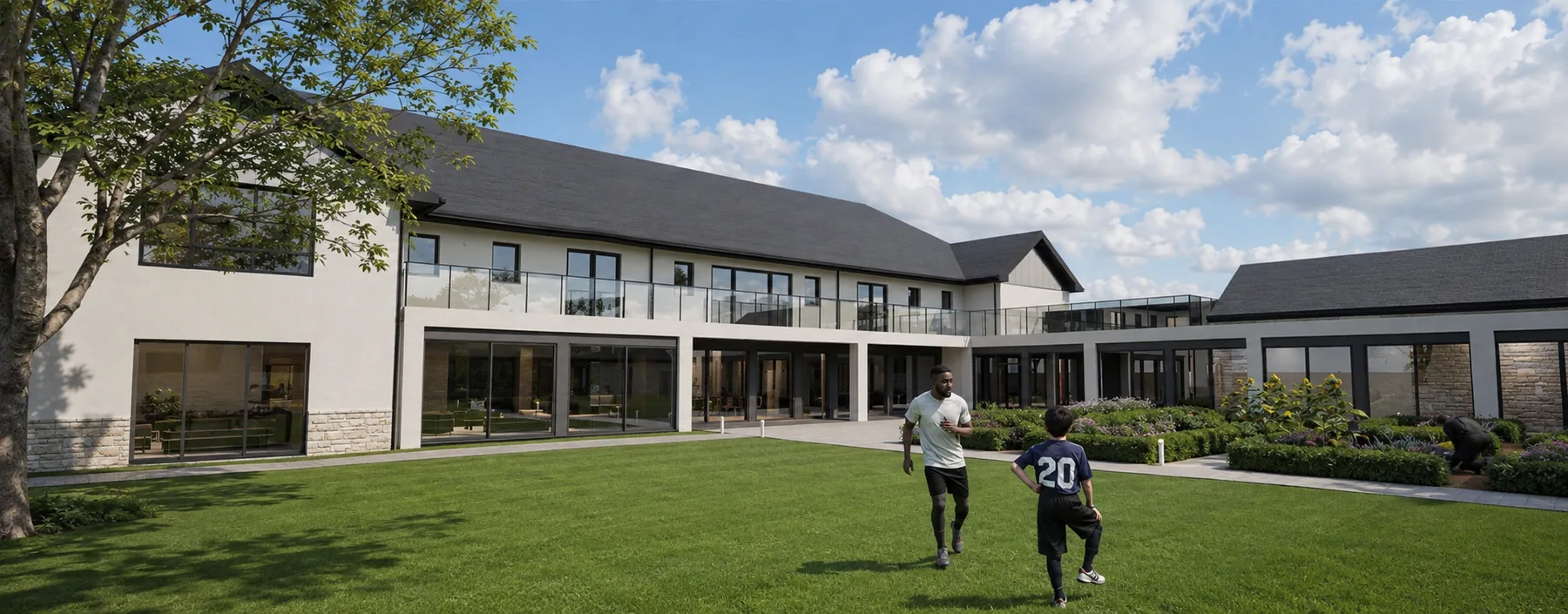
A glazed link corridor connects the new house to the retained stone outbuildings, creating a single, courtyard-level environment that moves seamlessly between old and new without steps or compromise.
Concept Renders
Visualising the vision
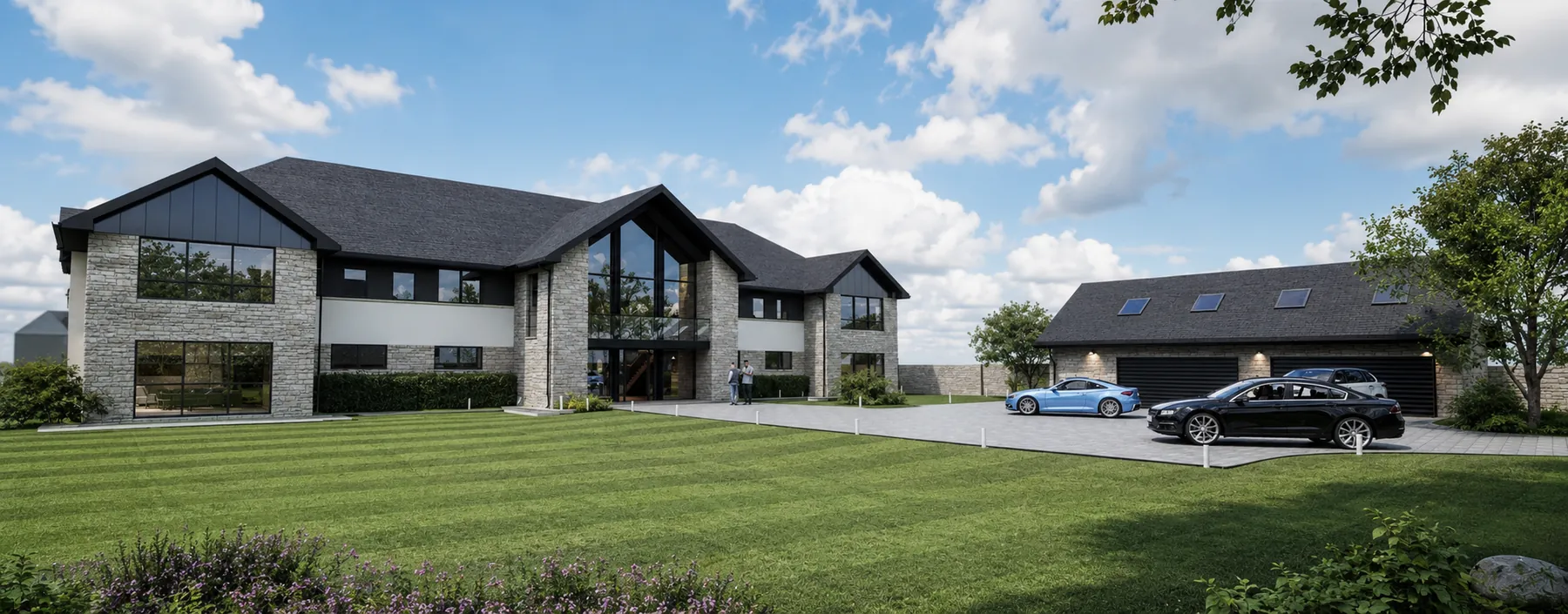
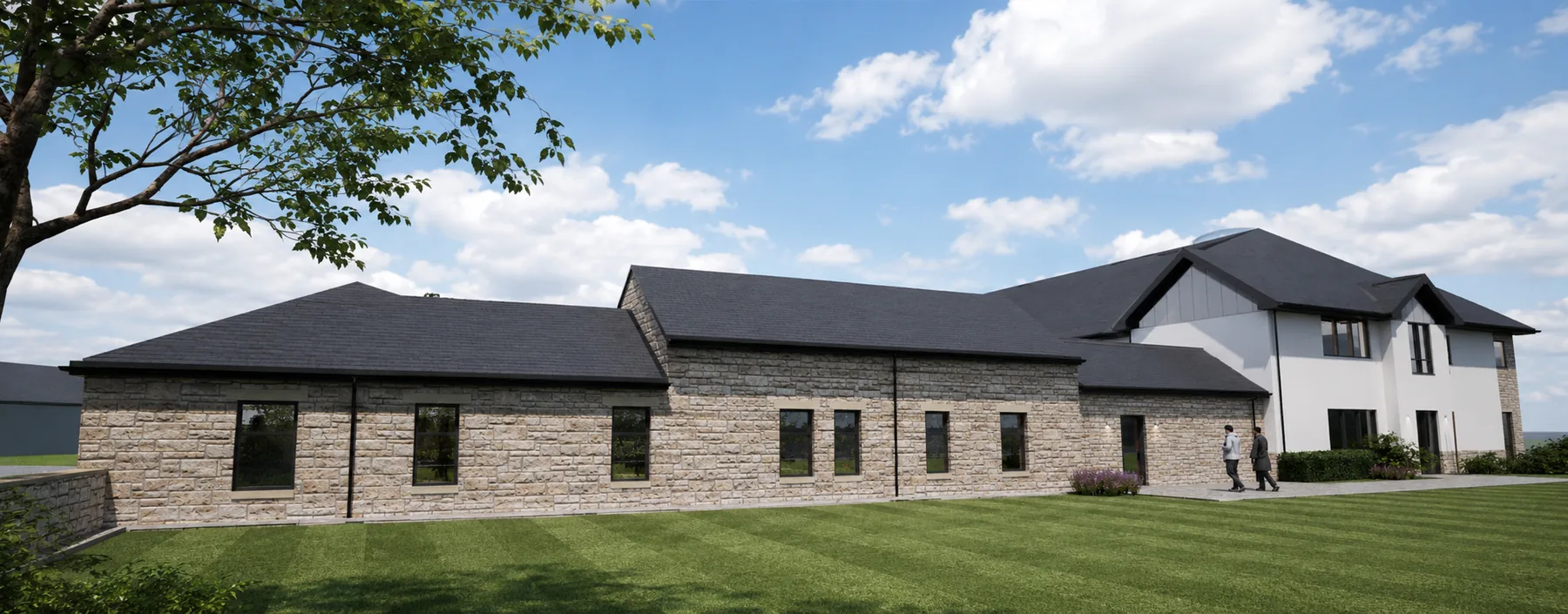
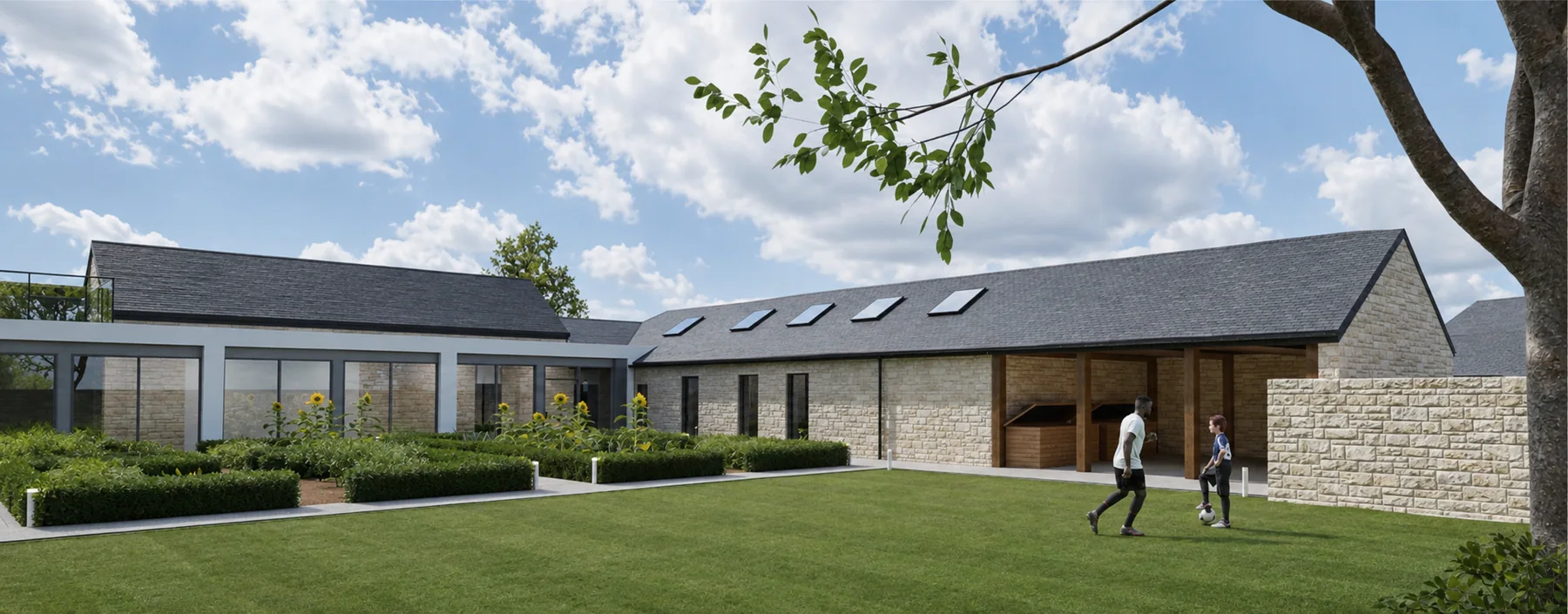
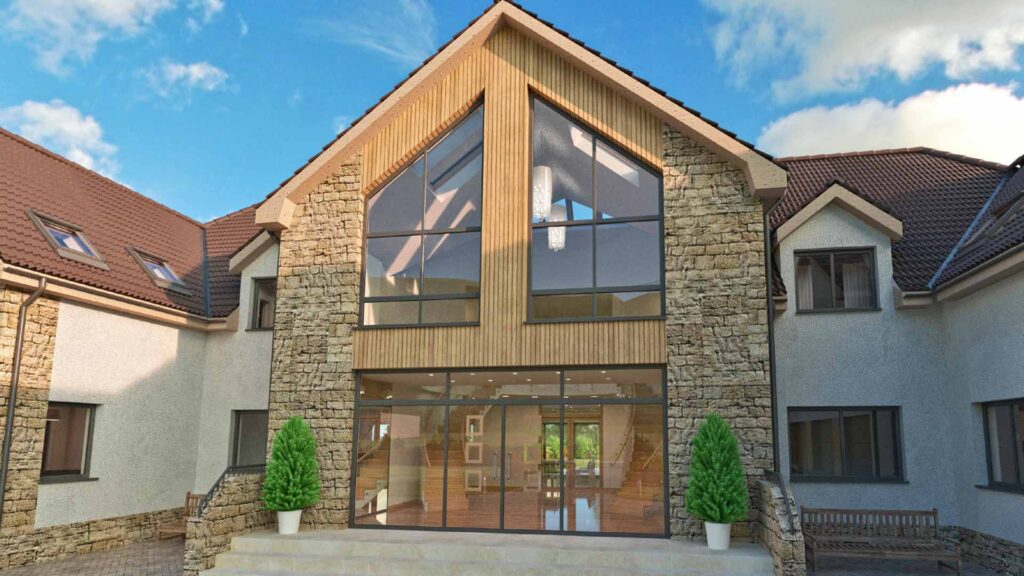
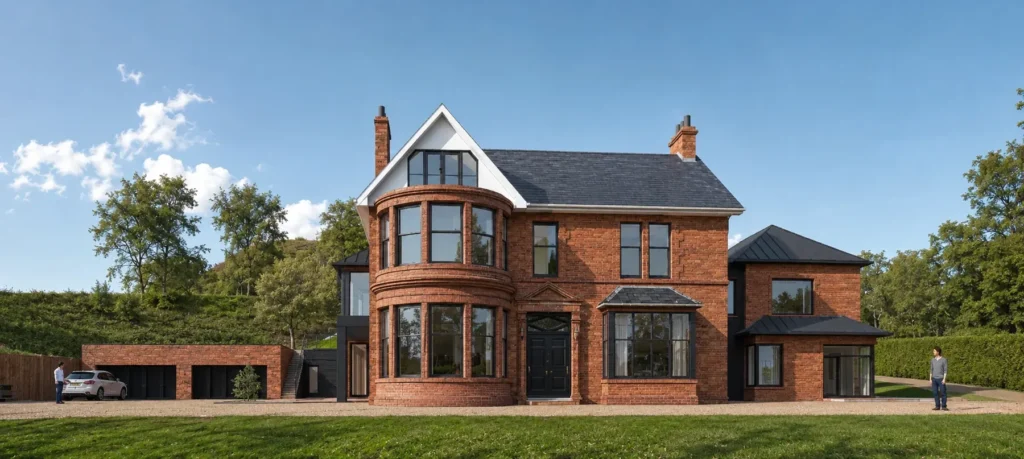
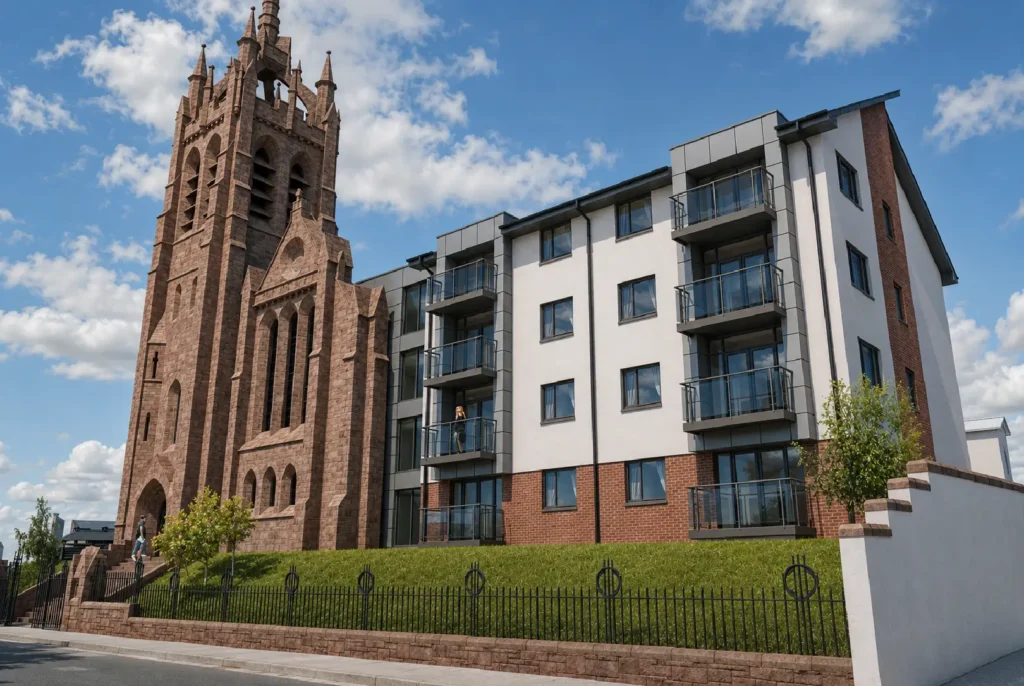
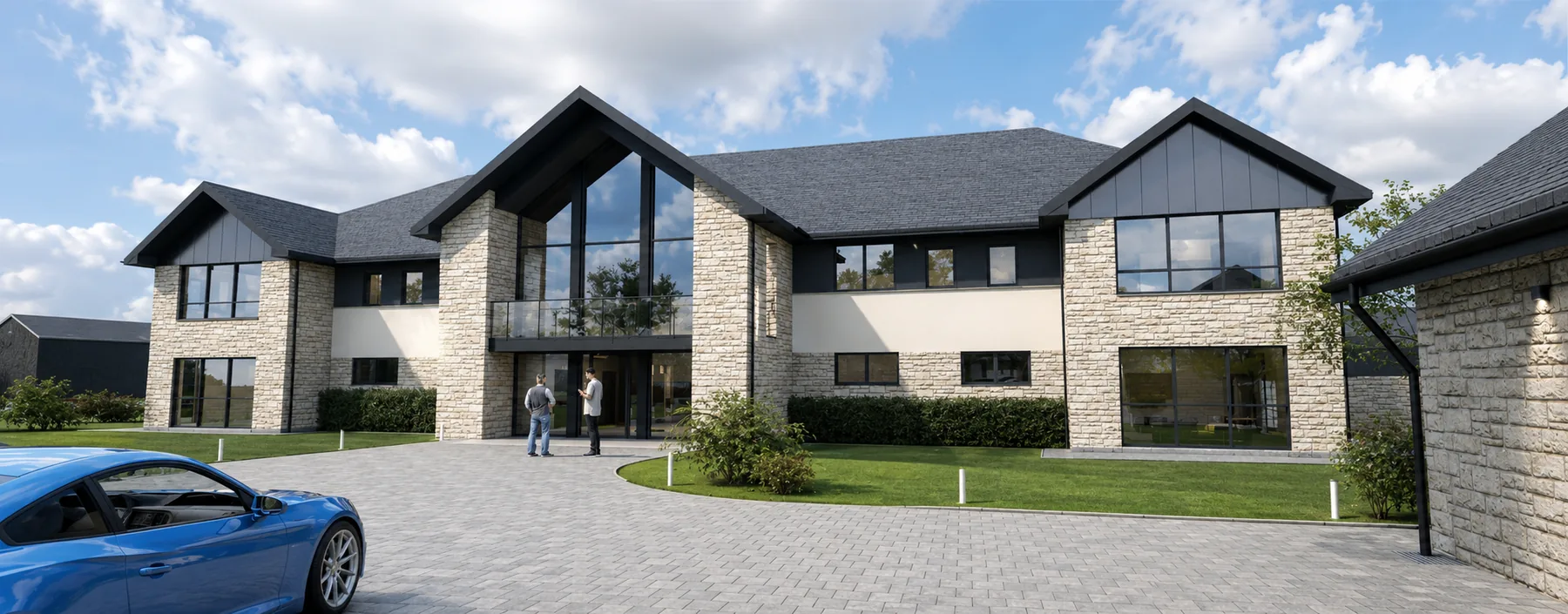
Architectural visualisations illustrating the proposed courtyard arrangement — a contemporary home formed around retained stone outbuildings, referencing the familiar Scottish farmstead typology with precision and restraint.
Estate Overview
The courtyard arrangement in full: new-build home, glazed link, and restored outbuildings enclosing a sheltered private garden.
New Build Wing
Gabled rooflines and a double-height glazed entrance screen — contemporary form grounded in Scottish vernacular proportion.
Heritage Restoration
Retained stone outbuildings — re-roofed in natural slate, fitted with timber windows, and brought back into daily use as ancillary accommodation.
Materials & Sustainability
Built to last, built to reuse
The architectural language draws on Scottish vernacular: gabled pitched roofs, natural slate, stone, render, metal cladding, and timber detailing. A distinct double-height glazed entrance screen marks the main arrival — a contemporary intervention set against honest, durable materials.
Where demolition is necessary, materials are treated as assets. Reclaimed stone from the outbuilding sections being removed is reused to repair retained structures and form courtyard boundary walls — nothing of value leaves the site.
The new house is designed to be highly insulated and airtight, incorporating low and zero-carbon technology. A SUDS drainage strategy manages surface water on site through attenuation and flow control. The outcome: a durable, future-ready home replacing an inefficient structure that could not be saved.
Natural SlateReclaimed StoneTimber DetailingMetal CladdingRenderLow & Zero-CarbonSUDS DrainageAirtight Construction
Site Experience
Courtyard, craft, connection
The design takes its cue from the Scottish farmhouse-and-steading arrangement: buildings gathered around a shared courtyard, each serving a distinct purpose but forming a coherent whole. At Legbrannock Farm, that principle is redrawn for contemporary family life across generations.
Courtyard Living
The courtyard is the connective heart of the scheme — sheltered, private, and calm. Open lawn, planted borders, and hard-landscaped areas balance to create a garden designed for everyday life, from quiet morning use to family gathering. Walled on all sides by the house and outbuildings, it is a room without a roof.
Multi-Generational Use
The retained outbuildings are repurposed as ancillary accommodation: a self-contained guest suite, a home office and workshop space — all connected to the main house via the glazed link but capable of operating with a measure of independence. The home is planned for a household that may grow, adapt, or welcome others.
Setting & Connectivity
The 1.34-hectare site sits off Legbrannock Road, between Newarthill and Carfin, with a grass paddock to the east and woodland to the north. Newarthill's village centre is approx. a ten-minute walk; the 254 bus route serves the area; and Junction 6 of the M8 is roughly a five-minute drive — rural calm with practical access to central Scotland.